I’m so sad because Instagram has become the main display for a brand. Not because it’s not cool, but because it’s a third party.
 2
2 1
1I've come to realize that above all I value expression. I see the freedom of expression as the ultimate human right, and the will to expression as the ultimate human virtue.
 1
1We will start designing websites for their primary context (mobile) at the same time when we stop designing documents for paper. Desktop monitors and paper printouts are both expired content mediums.
There are few subscriptions in this world which are worth paying for. Fundamental things, and few services qualify. People launching novelty software with monthly subscriptions sounds crazy to me. Just because SaaS used this model successfully up until recently doesn’t make it the right model. You are an indie developer who created an app which can’t in any way or form justify a subscription, you can’t slap on a business model from a venture backed company which needs to justify their existence to investors.
In order to feel happy we need to 1. come to terms with the fact that we live in the age of abundance, and 2. accept that abundance is not the key to happiness. Scarcity is. There is happiness in owning precious things, and using them no matter how infrequently. We yearn that of which there is not a lot of. Especially things which can be ours and only ours, like memories.
One could claim AI cheapens the product design experience. It was a different kind of fun when only some could do it.
Surprise: only some can do it still.
Learn the craft, own the expertise, delegate the shitwork.
It’s time to make unprofitable software. There is literally zero reasons why you shouldn’t be making your own apps, just for yourself or for your friends, or for a small business that couldn’t afford it before.
 1
1AI can do anything you want or need it to. But it won’t. Not without intent. And the intent is solely yours.
Baby I'll change
I've been listening to the new song Baby I'll change by Fiddlehead every day for like a dozen times since it came out. It's been a long time since I've been so captured by a song. You could say I'm obsessed.
Not to say that this is a surprise, as I'm a big fan of Patrick Flynn and his work in Have Heart.
All the right seeds were planted in me, a perfect soil so fertile and green.
When you're in the field, all purple and gold, look for me in the flowers that just won't grow.
Baby, I can change.
I am in a post-enthusiasm phase of my life.
 2
2 2
2I keep getting floored by people saying programming as a job is “over”. I was jelaous of engineers my whole life for having the ability to speak code with which they create software. The ability to speak code has never been more important than now, when we are able to delegate the code speaking. If you can’t understand what the AI wrote, you fall back on hope and trust, and I don’t think that’s such a good idea.
One of the few things which truly scare me is the—for some reason very new to me—notion that it takes so many things to go right for you to succeed. The compounding effect of good decisions can not be ignored. You need to not only make good decisions, but you need to keep making them as you go along, and that pretty much gets you in the door to have a shot at success. Life is brutal.
 2
2I am really partial to Anthropic because I—not just like—I see how their branding penetrates deep into everything they create. At any other company designers are able to deploy branding at a surface level at best, the stuff that you can see, which is basically the stuff designers can make for them. But with Anthropic you can clearly see the branding comes from them, not tacked on by a third party to whatever they built.
My favorite example of this is the --dangerously-skip-permissions flag. No one expects a branded moment in a CLI flag, yet there it is, it's clearly a Claude vibe.
To me this means that whoever takes care of their branding—and it might be a large headless group—does it right by shaping it around what the company is and what it makes, instead of forcing an expression to satisfy a trend, desire, etc.
Chapeau.
The easiest way to recognize that something was made with AI is by noticing when a cheap idea has a very expensive execution.
The one safe tell (for now) is the fact that LLMs have no filter on how hard they should go. Their entire fidelity spectrum is: one speed, go.
Humans don't work that way. When we're not sure about the potential for success, we don't go all in. We have matches to burn, and we are afraid of burning them all for nothing. AI has a flamethrower, and there is a whole world to torch.
 42
42Don't do creation and curation at the same time.
 2
2 2
2Once people realize that the people who are rich now got rich because they were there first, is perhaps the time when they will stop striving for wealth as a goal, and focus on the journey, and let the wealth be its outcome.
Writing tool idea: I would like to be able to tell recent changes from ones made earlier in any versioned document.
Imagine a Google doc where the new text has some kind of effect similar to ink which is not dry yet.
So imagine a document where old text which hasn’t been changed for a while is formatted just like standard text, but newer text (additions and changes) are formatted differently e.g. fresh changes in red, older ones in burgundy, additions in blue.
Ink traps full and all. That would be sick.
2I think I’m at that point in my life where I just no longer care about new stuff. Once you’ve tried enough new things you realize that the vast majority of them bring you marginal gains, and it’s really rare that something new comes along and has a greater impact on the way you do things.
As I get older reliability is a far greater quality to me than novelty.
 2
2 2
2 1
1Thought: new search and discovery paradigm
New services like Perplexity are in a cool position where they have the opportunity to abstract away the concept of "website", at least in the context of search and discovery.
The old school "Google way" is to search by keywords and get a list of links to other websites in return.
The current Perplexity way is to ask a question and get a boring page filled with long winded prose providing an answer to this question.
I find this experience rather underwhelming. I feel they have done their course.
What I would like to see as the new discovery paradigm is services creating actual tasteful web pages of answers, complete with images, videos, and interactive content. Something along the lines of a dynamically generated Wikipedia.
Users would be able to edit these pages, congregate around them as they could be reused for the same queries by other users creating little interest hubs for any topic imaginable.
Like Reddit for anything you can imagine.
11Producing good work is like making a good dish. It’s best if you forget about it for a while and come back to see it developed on its own without you messing with it too much.
I don’t see myself ever designing a website with AI. But I see AI helping me design a website.
2Architecture is the best possible way humans can creatively express themselves. Not only do people get to spend their lives in your work, but you get to shape their environments, influence what they see, and in turn influence what they normalize and think as possible. No other creative practice can do that at that scale.
2In business you need just the right amount of Dunning-Kruger to be successful.
After having successfully used AI to create a fully functioning web application, which is in production (albeit for internal use), I can safely say that laymen aren’t going to build any apps, any time soon.
 2
2Whenever I deferred to an expert, I had to eat shit. Fuck that, I probably know better and will no longer tiptoe around it.
I believe the reason social media is so big is because people are genuinely lonely. We work a lot of hours, which means we don’t leave enough time to relax, which means we can’t form relationships even if we had the time. So we scroll to infinity and send short form content into the void, and pretend it’s real.
If designers should code, then should architects build?
 1
1One of the ways designers could think about using AI in their work productively are those interactive, editorial articles The New York Times was known for. They used to require a small army to create. Now it can be just one dude and AI. How can you see a downside to that?!
You gain wealth in one of two ways: by doing something no one else wants to do, or by doing something no one else can do.
Always gravitate towards people who don’t know why they are doing what they are doing, but can't stop doing it.
A playlist is an MCP.
This video explains MCPs in a way that designers can understand, and the explanation is very clear: it is a framework which allows LLMs to talk to APIs in natural language.
The worst thing happening to us right now—and something the internet is to blame for—is the fact that all the young people now behave the same way. Different cultures have merged into one single global culture with its own behavioral patterns in which diversity is very undesirable.
Since everyone is chronically online, deviating from the newly established and currently valid norms of behavior, people are very afraid of personal expression because it is considered a deviation.
Oddballs today are not people who are weird, but those who do not behave in a very specific way, those whose aesthetic preferences differ from the global canon, etc. It has never been more necessary for us to be weird, it is a responsibility.
1Recently I’ve heard of an engagement metric on X called “dwell time” which expresses how much time a user has spent paying attention to a post on the timeline. This explains the short form video brain rot content.
I just went through a list of my idea notes. It's amazing how many product ideas which I thought might be businesses are now trivially easy to make by yourself, with AI.
Tobi Lutke of Shopify said that from now on every new hire will need to prove that they can do the job better than AI can. In the mean time when I talk to people, most of them are still dismissive about AI, either saying it's still dumb (it is), or they choose to ignore it. The truth of the matter is, it's your benchmark now.
Kids these days are amazing at recognizing meaningful aesthetics and utilizing them to stand out. You no longer have to create a certain aesthetic in order to own it. You simply have to identify how it resonates with the world at the moment, because it's contextual and serves you. And this is not about trends. Trends are something you fit into, but what's happening now is that people are recognizing aesthetics which are proven to be effective and have certain features that they recognize as meaningful right now, outside of their original context. These are preexisting aesthetics, and people are repurposing them for their own means.
Bye Notion, hello Obsidian
I’ve finally started to move off of Notion for my knowledge and information system. It’s been so hard since I am so invested in it, that I am never going to trust any third party app to own and host my data.
I’ve made peace with the fact that my stuff is trapped in there and I am starting fresh in Obsidian. Obsidian’s UX is something I’m willing to adapt to because I think it’s the best interface we have so far to deal with plain text content. It’s a whole thing I have a few words to say about.
What I’m most excited about is the switch to just power-dumping my notes into daily notes, and using tags to reference certain bits (lines and headings), and using Dataview to surface it wherever I want.
I am still using Notion for my ongoing project management, but I think all my new stuff is going to be in Obsidian as well.
 3
3AI will never make you an expert as it merely augments what you already know. It might make you feel like one, but that just makes you a poseur. Choose to do the work instead.
It’s interesting how after years of being pretty obsessed with graphic design and generally how things look like, the only emotional response for me these days—with regards to aesthetic—comes from architecture. Everything else just seems too… ephemeral.
3It sure looks like we are living in a world where being the “news bearer” is more important than creating the thing the news is about. Being louder, being the first to publish it. I wonder where will this take us.
 11
11Figma should add a “feedback” type of comments. Free form comments can get overwhelming and some people are not that good at verbalizing their feedback. If designers could create questionnaires as templates for comments, it would help greatly.
Is it worth it to be the first?
Thinking about the recent feature release for stacks by Sketch, I can’t help but wonder how differently Sketch and Figma got to the same place. Figma was the first one to the market with autolayout, and they got there in trailblazing mode. Did Sketch wait on purpose to develop stacks, so they could skip the R&D? If so, why?
A feature such as stacks was a solved problem for Sketch because Figma set the expectations with autolayout.
What did Figma gain to make the R&D worth it to be the first, and what did Sketch lose for it?
1AI needs the ability to illustrate its answers
Imagine asking AI for some construction or assembly instructions, and it not only describes them, but creates images, technical drawings, even animations and videos to offer visual aid.
At the moment when using products like Perplexity, ChatGPT, etc. I can get overwhelmed with text because it's really bad at brevity. It seems it wants to generate more text. Illustrations would greatly reduce this feeling and make the consumption of the information a much more natural and pleasant experience.
3High consciousness, low agency
I've been thinking about how people interface with the world, and I realized that the absolute worst position to be in is to be high consciousness, low agency.
What I mean by that is that you always understand what's wrong in a situation, but at the same time you lack the will—or… something or other—to act in order to make it better. You end up being the person responsible for pointing out the flaws in things. And if you don't, it eats you up from the inside. It's a harsh reality.
 1
1 1
1On art
There is no good or bad art. There is relevant, and irrelevant art.
In order to be able to say that a piece of art is good, it means that it represented something valuable at the time it came to be. It had a very specific feature needed at its inception.
Sometimes that’s something new, something no one was able to do before. Other times it’s something no one dares to do. And sometimes it’s just something someone needs at that point time.
4 11
11On efficiency
You will never be able to create more value by increasing efficiency. Save that for the factory floor. On a personal level, it's just productivity porn. No system which enables you to do more stuff is ever going to help you to do more meaningful work.
Efficiency implies the extraction of value, not its creation. Find ways to do less, but achieve more.
I will do my best to do so as well.
Thank you for taking the time to read what I put out. Happy new year.
12I love these little intermezzos on the Fibery website.
One of the biggest problems designers have is the fact that they have never been on the other end of the client-vendor relationship. Get your face out of Figma and go be a client. You will gain a newfound respect for their role, and they will no longer have to treat you like a baby.
1Adopting an aesthetic is not differentiating. It's siding with a larger group, or fitting in to a pre-existing style in order to remove risk. This is why following trends, and designing within systems is safe.
I find it rather interesting that in Serbian we use the same word for “favor” and “service”: usluga. In English it’s clear which one implies an exchange.
The lack of specification results in improvisation. It's up to you to decide whether that's the goal, or not.
The founders and stakeholders will probably be better at your job than you at first, and that's OK. They've already invested time in it, and most likely know the problem space.
It's up to them to give you a fair chance to succeed, and it's up to you to give it your best shot. Everything else is just playing games and wasting each-other's time.
Are you a revenue generator, or a cost center?
Is your organization utilizing design purposefully and strategically?
Are you asked for input when business decisions are made?
When it comes to design work, are you pressured to execute in a certain way by non-experts?
Figure this out, and you will know how your company views design.
 2
2As an attorney the best complimentary skill you can learn is typography. Lawyers tend to produce the worst documents in every way imaginable.
Arsenije recommends checking out Matthew Butterick's work, who is a lawyer and typographer.
Product design → Software design
Recently I've been trying to change my vocabulary when talking about what we do.
“Product design” was passed on from the physical world and always required additional explanation, which is why I find “software design” a much more clear, and better fitting term.
6 2
2 1
1 11
11If I don’t own it, it’s not on me
I'm certain most people have been in this situation where an expectation is placed on us to run the show like it's our own. It's amazing when someone trusts you so much that they are willing to do that.
Unfortunately, more often than not this expectation is placed without its prerequisite which is at least a certain level of autonomy. In product this is usually manifested with realizations such as "team members are not looking at the product holistically", "no one is coming up with ideas", or "they are only executing, and no one is innovating".
Well, what can I say, no one wants that shitty deal. And the bigger the organization, the more of this there is.
My official stance on the matter was always: if my vote doesn't count and I am not empowered to make decisions, I cannot be held responsible for the outcomes.
74 4
4On working with friends
I've had the “pleasure” to experience both versions of working with friends; I've worked with friends who I'm no longer friends with, and friends I'm still working with.
I personally feel that working with people I care about personally brings out the best in me, and I do my best work. I need that “chemistry”.
However, working with friends is a grownup relationship. In order for it to work you need to possess a great amount of emotional intelligence and maturity.
I know from experience—mine and others'—that once you survive a couple of shipwrecks you're probably good for the long run.
Go for it!
On sensibility
Back in the 90s I had a habit of going to a music store and buying new music based on the design of the album cover alone. I always believed that the cover should capture the sensibility of the music it represents, and good ones definitely do.
One of my favorites I discovered this way is the band …And you will know us by the trail of dead, and their self-titled album.
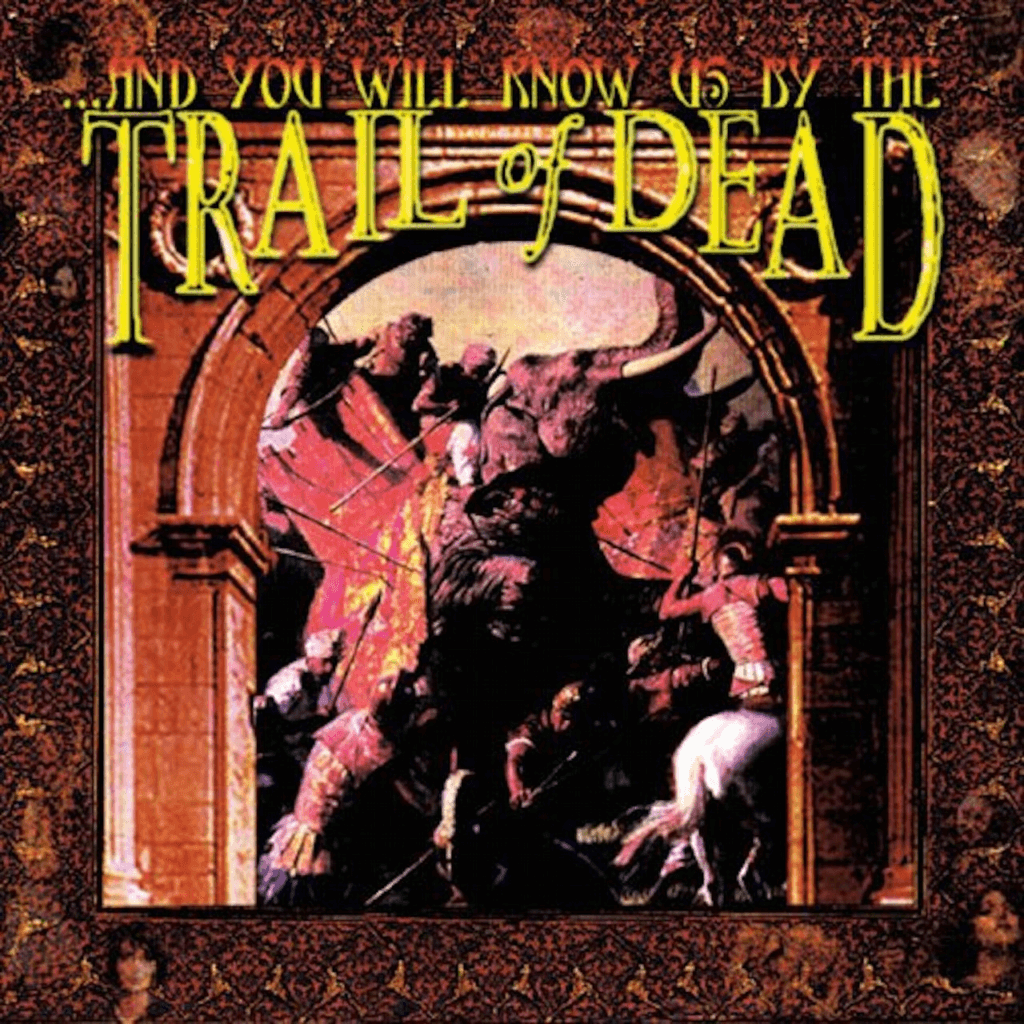
Their music was something completely new and fascinating to a 16-year-old me. I guess it's called post-hard-core or something, doesn't matter. What matters is that their name and cover art perfectly represented the sensibility of their music, and set my expectations up for the experience of listening to it.
Take that as you will, but there's a huge takeaway in there in regards to design and digital products.
Industry acronyms
Our industry is overflowing with acronyms—looking at you, marketing—and at this point, I don’t even know how we manage to understand each other anymore.
Sure, they save some time but overusing them is just passe. It’s not in good taste.
When you’re talking to a colleague, that’s actually OK as there’s virtually no risk of miscommunication. But when you’re talking to people outside of your domain of expertise it’s good to tone it down, and just use normal words. They will be able to feel better because they won’t have to look them up or keep asking you to clarify, and you will actually have a better chance of getting your point across.
Your logo doesn't matter
It is only by association with a product, a service, a business, or a corporation that a logo takes on any real meaning. It derives its meaning and usefulness from the quality of that which it symbolizes.
Paul Rand
The problem with the first idea
The first idea is just that — first idea. Almost a gut reaction to the problem. Yet we often treat it as the final one. We stick to that one — first thought — give it a lot of love, refine it, nurture it and defend it. Until it proves to be wrong. And we get frustrated.
Janko speaking the truth. And it only makes sense, because if you limit yourself to a single way of solving a design problem, it’s going to be precious to you, and if it turns out to not work so well you’re going to have to go back and come up with another one. To some this may not be an issue, but to a lot of us it’s a psychological step back, an admittance to defeat even.
As the years pass I am more and more convinced that starting lo-fi and exploring many directions is the way to go. Not only do you get the benefit of being able to compare different solutions to a problem, but the client management ends up being much easier as a consequence of a more transparent design process.
Due yesterday
Requesting a quality result out of a project due yesterday is like having someone teach you how to fistfight really quick because you have to fight this really big dude tomorrow.
It’s not going to happen. He can show you a trick or two, but that’s it.
Face it, accept the fact that you’ve made some bad decisions, and that you’ll have to do the best you can with what you have at your disposal.
I.e. pray to God you’ll not get your ass kicked too hard.